


Lab Diamond vs Natural Diamond — What's the Difference?
Lab Diamond vs Natural Diamond: The Core Facts
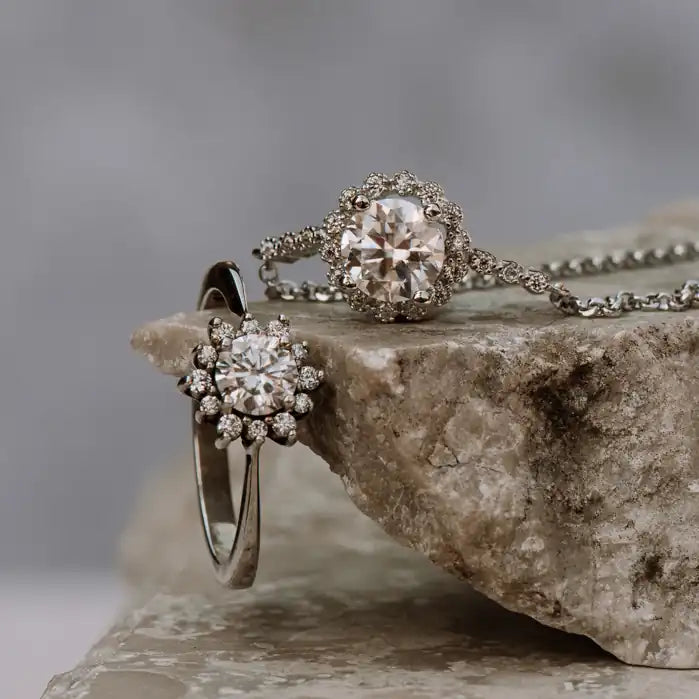
Lab-grown diamonds and natural diamonds are chemically and physically identical. Both are pure carbon in a diamond cubic crystal lattice. Both score 10 on the Mohs hardness scale. Both have the same refractive index (2.417) and the same brilliance. The difference is where they formed: underground over billions of years (natural) or in a controlled laboratory over weeks (lab-grown).
Side-by-Side Comparison
| Factor | Natural Diamond | Lab-Grown Diamond |
|---|---|---|
| Chemical composition | Pure carbon (C) | Pure carbon (C) |
| Hardness | 10 Mohs | 10 Mohs |
| Brilliance / fire | Identical | Identical |
| Certification | IGI, GIA | IGI, GIA |
| Price (1ct, E/VS1) | R45,000 – R70,000 | R8,000 – R14,000 |
| Price difference | Baseline | 60–80% less |
| Resale value | 30–50% of purchase | 10–20% of purchase |
| Environmental impact | ~57 kg CO₂ per carat | ~0.028 kg CO₂ per carat (renewables) |
| Traceability | Complex supply chain | Known origin |
| Rarity | Finite, geological | Scalable production |
Price: The Biggest Practical Difference
The price gap between lab-grown and natural diamonds has expanded significantly since 2020. In 2026, a 1ct lab-grown diamond (E colour, VS1 clarity, Excellent cut) in South Africa retails for R8,000–R14,000. The natural diamond equivalent retails for R45,000–R70,000. That gap — approximately R35,000–R55,000 for a single stone — means most buyers choosing lab-grown can achieve a significantly larger or higher-quality stone within the same budget.
Quality: Are Lab Diamonds Lower Quality?
No. Lab-grown diamonds are graded on the same 4Cs scale as natural diamonds. Many lab-grown diamonds receive higher clarity grades than natural stones because the controlled growth environment produces fewer inclusions. At Orbit Rings, all lab-grown diamonds are IGI certified and meet the same quality thresholds as certified natural stones.
Ethics and Environment
Lab-grown diamonds eliminate concerns around conflict mining (blood diamonds). They require no new mine excavation. When grown using renewable energy, lab-grown diamonds produce approximately 0.028 kg of CO₂ per carat versus an estimated 57 kg per carat for mined diamonds. South Africa has a complex diamond mining history — the Orbit Rings position is to honour that heritage while offering a cleaner-origin alternative for buyers who want it.
Resale Value
Natural diamonds typically resell at 30–50% of their retail purchase price. Lab-grown diamonds currently resell at 10–20%. Neither type of diamond is a strong investment relative to other asset classes. The choice between lab and natural should be driven by the ring itself — what the buyer wants to wear and gift — not by expected resale.
Orbit Rings' Position
Orbit Rings offers both IGI-certified lab-grown and natural diamonds. Our recommendation is straightforward: if budget is a key factor, choose lab-grown and invest the saving in a larger stone, better metal, or more detailed setting. If origin story and long-term heirloom value matter more than cost, natural is the right choice. Either way, every diamond we offer is IGI certified and handset in South Africa.
Frequently Asked Questions — Lab vs Natural Diamonds
Are lab diamonds worth buying?
Yes. Lab-grown diamonds are real, certified diamonds that offer 60–80% cost savings versus natural equivalents. For buyers who want maximum diamond quality within a set budget, lab-grown diamonds represent exceptional value. All Orbit Rings lab diamonds are IGI certified.
Will a jeweller be able to tell my diamond is lab-grown?
Not by visual inspection. Only specialised laboratory grading equipment (infrared spectroscopy or photoluminescence testing) can identify a lab-grown diamond. Standard jewellery tools and the naked eye cannot distinguish lab from natural.
Which is better for an engagement ring — lab or natural diamond?
Both are excellent choices. Lab-grown diamonds allow you to maximise the stone size and quality for your budget while delivering the same visual result. Natural diamonds carry more traditional significance and somewhat better long-term resale. At Orbit Rings, the most popular engagement ring choice is a lab-grown diamond of 1ct or above in 18ct gold, which delivers a dramatic ring at a fraction of the natural diamond cost.
Do lab diamonds fade or change colour over time?
No. Lab-grown diamonds are permanent, just like natural diamonds. They do not fade, cloud, or change colour with age because they are genuine diamonds with the same crystal structure as natural stones.
What certification should a lab diamond have?
IGI (International Gemological Institute) is the most widely used certification for lab-grown diamonds. GIA also certifies lab-grown diamonds. Orbit Rings uses IGI certification for all lab-grown diamonds, which includes a full 4Cs grading report and confirms the growth method (CVD or HPHT).
After the Comparison, Move Into the Right Path
Once you know whether lab-grown or natural is the better fit, compare the actual stone journey on our diamonds page, start configuring the ring via Build Your Own Ring, use the lab-grown guide for pricing and certification context, or return to the engagement hub if the purchase is proposal-led.



ORBIT™
Since 2018, Orbit™ has pioneered boundaries in design and manufacturing, evolving from a ring brand to a global lifestyle name. Today, we cater to all aspects of everyday wearables and everyday carry, connecting our community to endless adventure and marking special moments in their lives.
Our versatile collection includes rings, jewellery, wallets, gear, bags, and watches. Each product is crafted with the same core principles that made us the most innovative ring brand: high-quality materials, thoughtful design, and unparalleled functionality.


